Emotional intelligence for Middle managers
You can know the right thing to say as a leader, and still say the wrong thing when emotions take over.
That’s why emotional intelligence matters in leadership, because rapport, trust, and influence is build one conversation at a time.
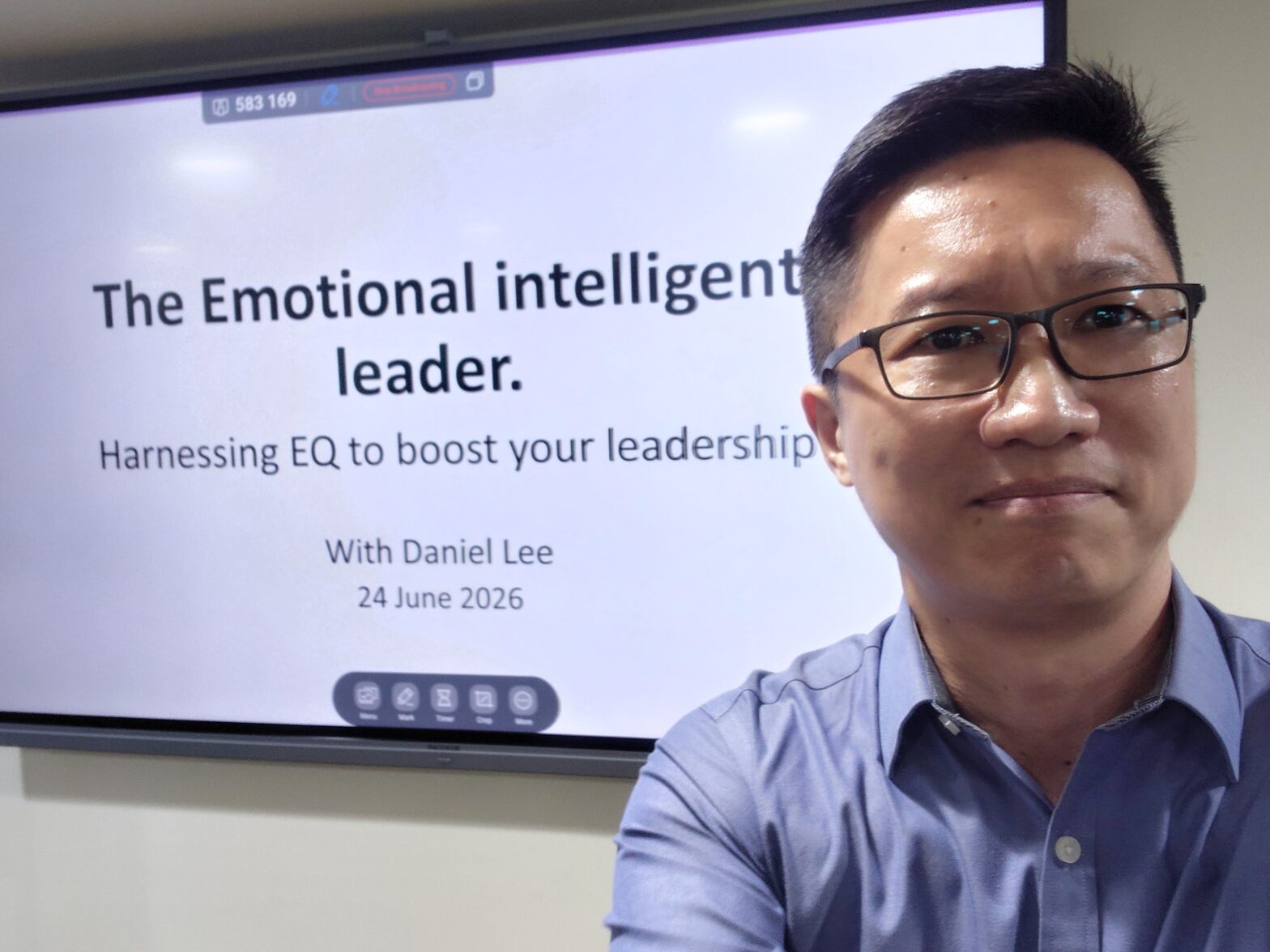
I recently ran a workshop on The Emotionally Intelligent Leader for a group of middle management civil servants.
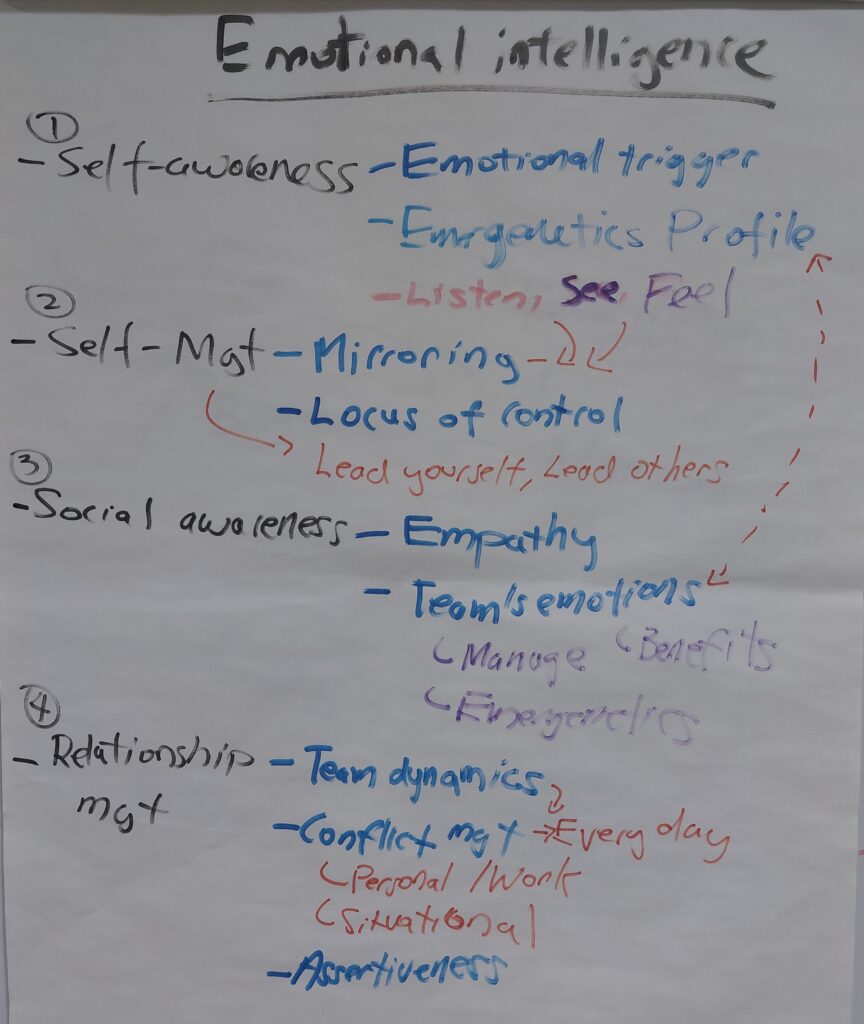
We explored four areas that shape how leaders work with people.
1. Self-awareness
One key element in Emotional Intelligence (EQ) is understanding how your emotional and behavioural patterns affect the way you respond to others.
Recognise your emotional triggers, because everyone wants to approach and speak with their boss when the latter is in a pleasant mood.
It becomes part of your job to almost always be in a pleasant mood, because you never know when your people will approach you.
2. Self-management
Focus on what you can control, rather than blaming circumstances or other people. That also extends on leading others in a way that gets them to focus on what they can control, rather than on what they cannot.
You can’t always control what happens, but you can choose how you respond. And that requires that all of us learn to manage our reactions, and come up with more appropriate responses to leadership situations.
3. Social awareness
One thing I shared with the participants is to pay attention to what people say, how they say it, and what they may be feeling. That means listening beyond the words that are said, to the actual meaning behind them.
What becomes helpful is Empathy, because it can help you understand your team’s emotions, energy and needs, especially when they are not using the right words, or even saying them to you because they feel uncomfortable to share, which might not be caused by you.
4. Relationship management
Navigating team dynamics is more than just the 1 to 1 relationships leaders must have with their team. It is also ensure that the team works well when you are not around.
This means addressing conflicts when they arise, assertively when necessary, and handling difficult conversations before they become bigger problems.
This is where most middle managers struggle.
Not because they do not know what to do, but because knowing what to do and doing it under pressure are two different things.
Emotional Intelligence is simple, but not easy.
It shows up in the daily conversations, in how you respond when someone challenges you, in how you handle a disagreement, and in whether you can manage your own emotions while helping others manage theirs.
Which of these four areas is the hardest for you to practise consistently as a leader?
#SimpleLeadership #EmotionalIntelligence #LeadershipDevelopment #MiddleManagement #PeopleManagement #LeadershipSkills #LeadershipCommunication #TeamLeadership


